What Sound Masking Is & How It Works
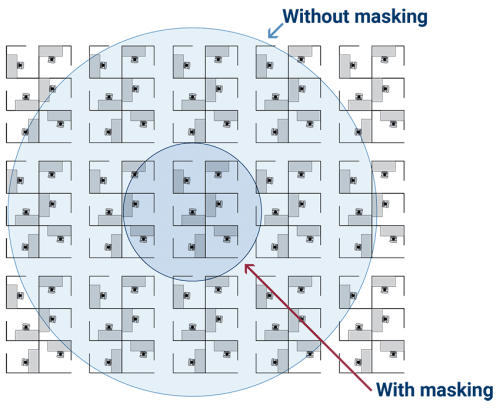
Sound masking involves the introduction of a subtle, engineered background sound that is often compared to the sound of soft airflow. It reduces the intelligibility of speech and diminishes distractions. Unlike white noise, which spans all audible frequencies, sound masking is specifically tuned to the frequencies of human speech, making it more effective and less intrusive.
The primary goal of this sound treatment solution is to render background conversations less intelligible, thereby reducing distractions and enhancing privacy. This is achieved by raising the ambient noise level in a controlled manner. When the ambient sound level is increased, it is harder to discern individual conversations or noises – effectively “masking” them. This process doesn’t eliminate noise but rather makes it less noticeable and disruptive.
The Installation & Tuning Process
Sound Masking speaker solutions are installed above ceiling tiles, in the ceiling tiles, or with hanging pendants in exposed ceilings. Depending on the size and specific needs of an area, a hybrid installation with all or a combination of the above-mentioned options is not uncommon.
There is a “connection point” where the speaker cables terminate, and the system is hooked up to the main processor or “brain”. Ideally, speaker installation takes place before the ceiling grid is installed and tiles are in place; however, they can be installed post-construction as a retro-fit solution as well.
Each sound masking solution includes a detailed tune and balance to make sure you receive the full advantage of the benefits of engineered sound injection regardless of the shape of a room or environmental variations in the building. This tuning process is completed when the furniture and other office products are in place to make sure the process is tuned in a representative environment.